Findings
Engagement segments exist, and most users miss the 10K mark
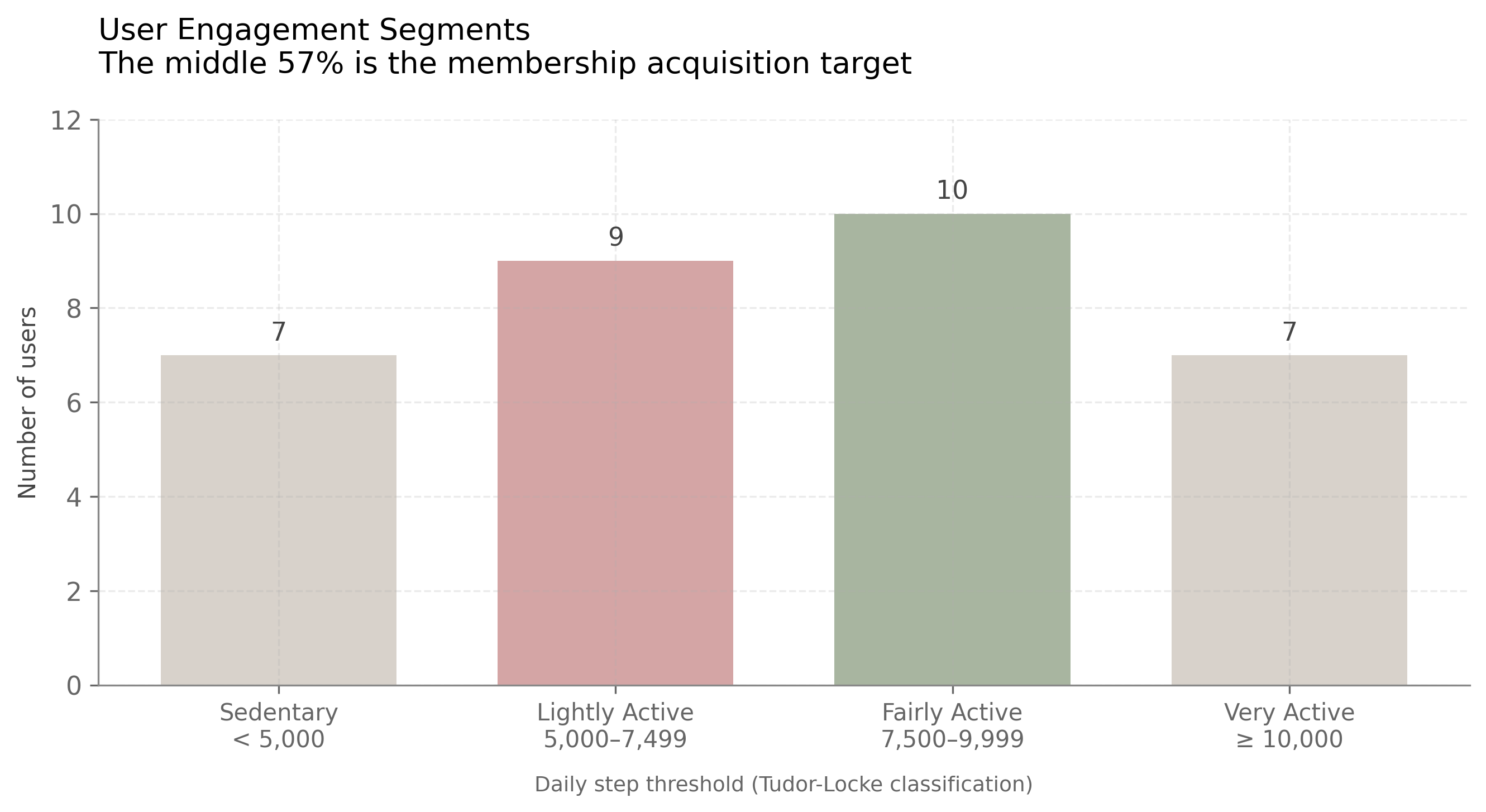
Users split into four activity tiers. Only one in five is Very Active; the rest sit below the 10,000-step target.
The two extremes are wrong targets: Very Active users are already engaged, Sedentary users aren't ready. The 57% in the middle is where personalized guidance creates the most value.
Sleep tracking adoption defies the obvious hypothesis
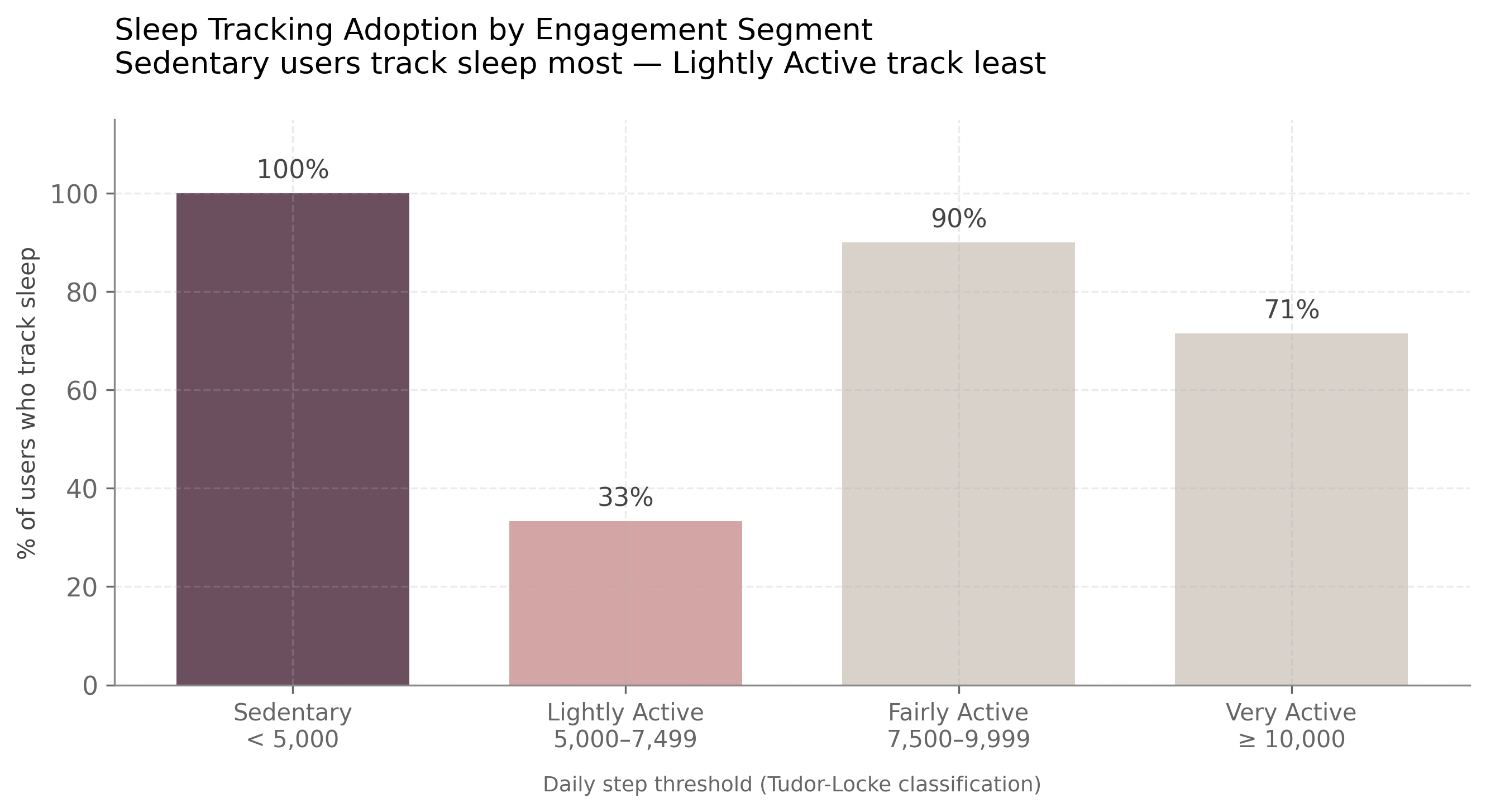
Sleep tracking was highest among Sedentary users and lowest among Lightly Active ones, the reverse of what I expected.
Sleep tracking is a separate engagement dimension. That points to two acquisition strategies: a "balanced wellness" pitch for multi-feature trackers, and a "starter engagement" pitch for the casual middle.
Sunday is the lowest-engagement day
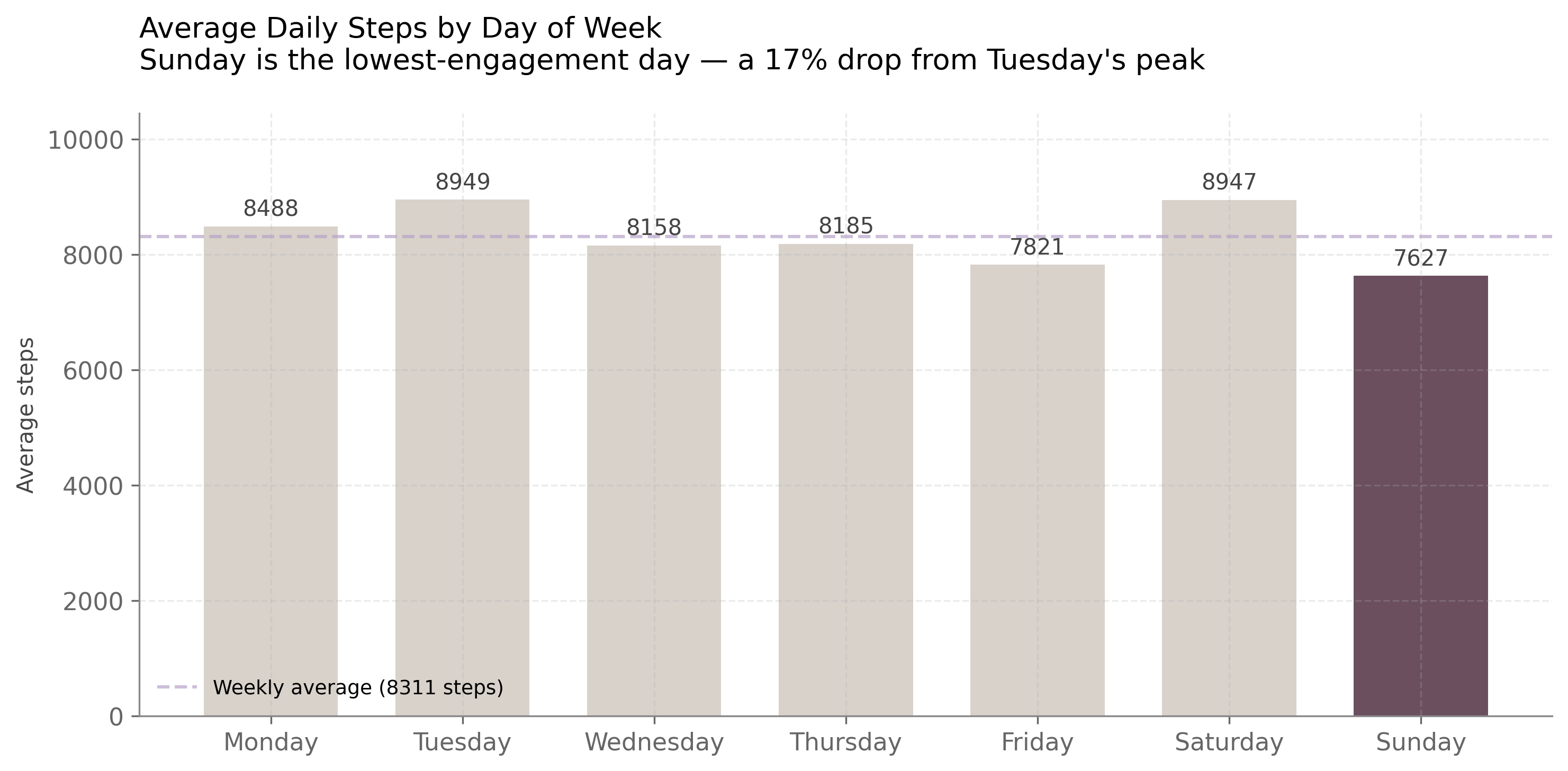
There's a 17% gap between Tuesday's peak and Sunday's trough, a weekend disengagement arc that resets on Monday.
Sunday afternoon is the highest-leverage delivery window: catch users when self-motivation is lowest and pivot them toward Monday's renewed intent.
Sedentary time predicts poor sleep more than activity predicts good sleep
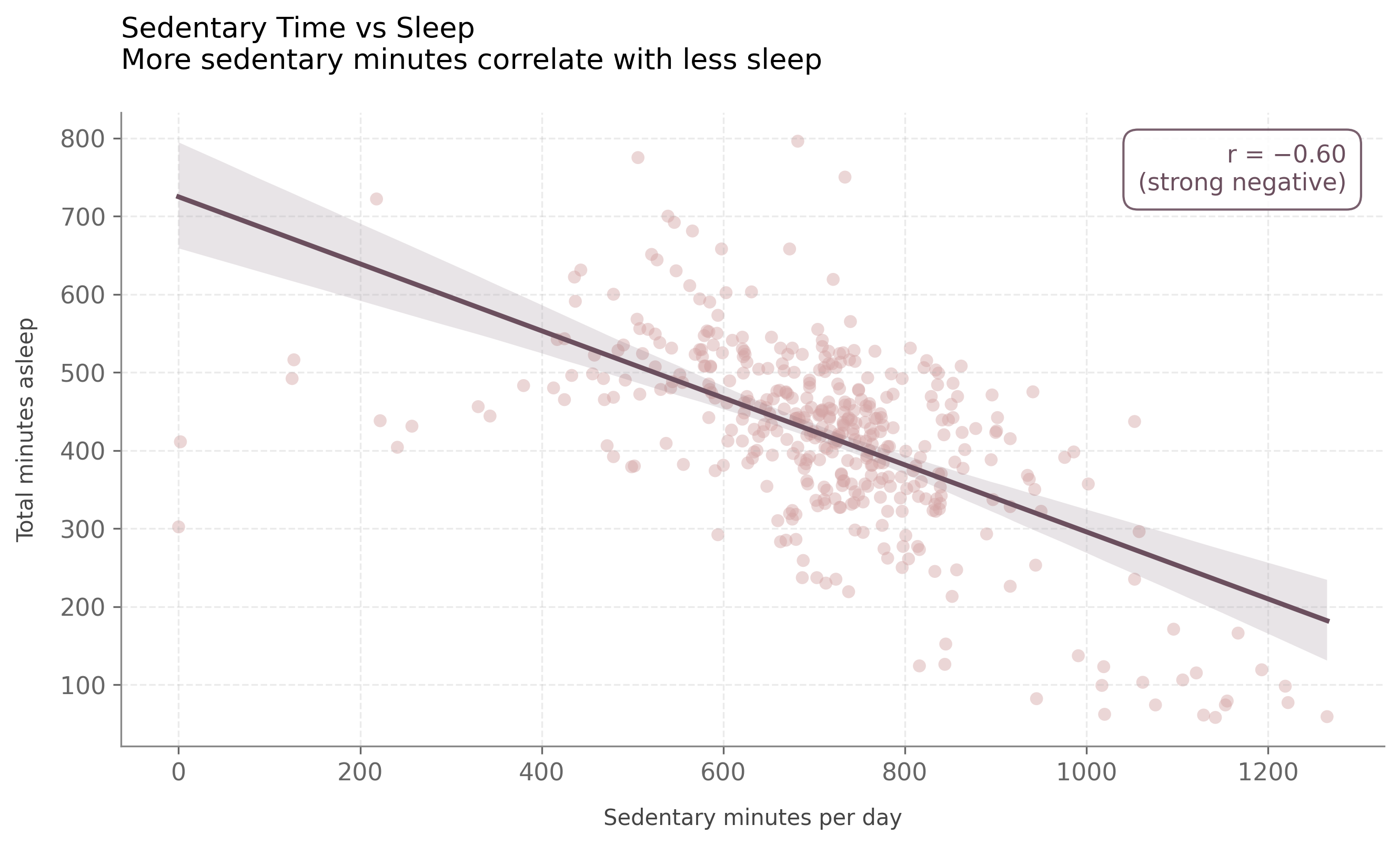
Across 410 paired days, sedentary time correlated with sleep at −0.60, far stronger than steps (−0.19) or active minutes (−0.09).
Membership should emphasize movement micro-interventions (standing reminders, short walk prompts), not workout intensity. This fits Bellabeat's holistic wellness positioning.